Princess Leonor: Spain’s Young Future Queen Breaking Royal Traditions in 2025
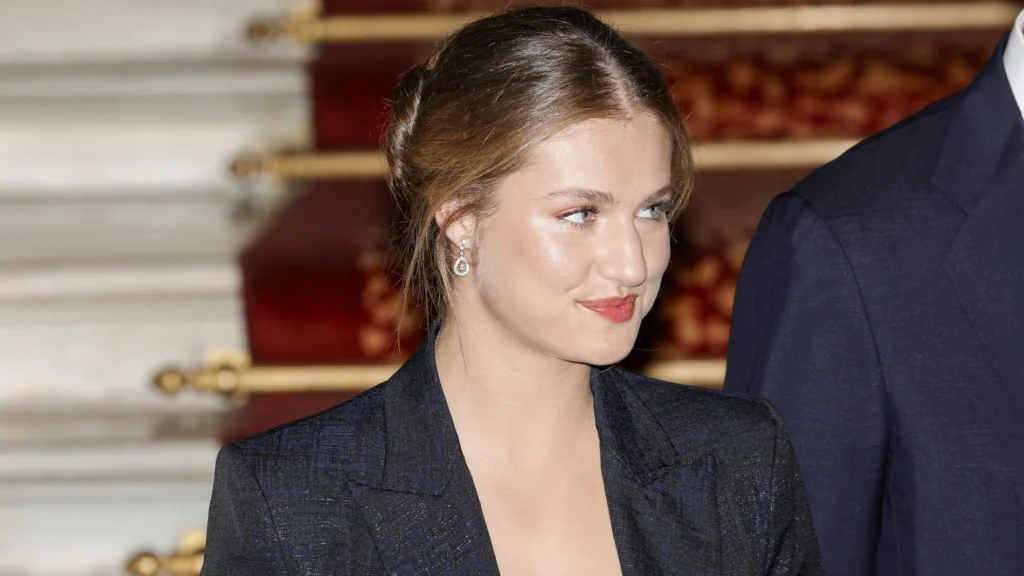
Princess Leonor stands at the threshold of a new era for the Spanish crown. The 19-year-old Princess of Asturias—daughter of King Felipe VI and Queen Letizia—is not just Spain’s heir; she’s the symbol of its future monarchy. Born in Madrid in 2005, Leonor grew up partly in public view, but with the privacy afforded youth. Today she balances royal protocol with very relatable pursuits: a global education and even intense military training.
For a monarchy restored only in the late 20th century, Leonor is testing how royalty can thrive in the digital age. Unlike predecessors who clung strictly to tradition, this young princess appreciates global culture and understands the power of a good viral moment (even if she has no personal social media). By 2025 her story is watched worldwide. Across Europe, many say Leonor is a breath of fresh air: fluent in English, passionate about modern causes, she embodies a new kind of monarch — one who mixes duty with 21st-century values.
Since gaining international attention in her mid-teens, Leonor’s name appears in headlines from Madrid to London. She represents more than a future queen: for many, she is a symbol of hope that the monarchy can stay relevant in a rapidly changing world. Even as Spain debates its future, Leonor often comes up as a reassuring figure. Young people admire how this still-teen balances royal duties with initiatives on issues like education and sustainability. In short, Princess Leonor’s story has global resonance: a next-generation monarch navigating diplomacy, digital media, and social change all at once.
< Previous Post Next Post >
Meet Spain’s Future Queen: Princess Leonor
Born on October 31, 2005, Princess Leonor de Borbón y Ortiz became Spain’s Princess of Asturias when her father took the throne in 2014. As the elder daughter of King Felipe VI and Queen Letizia, she is heir apparent and will one day be Spain’s queen. Leonor grew up in Madrid under the careful eye of the public. Her younger sister, Infanta Sofía (now a late-teen studying abroad), provides a familial counterpoint, but Leonor shoulders the expectations of the crown.
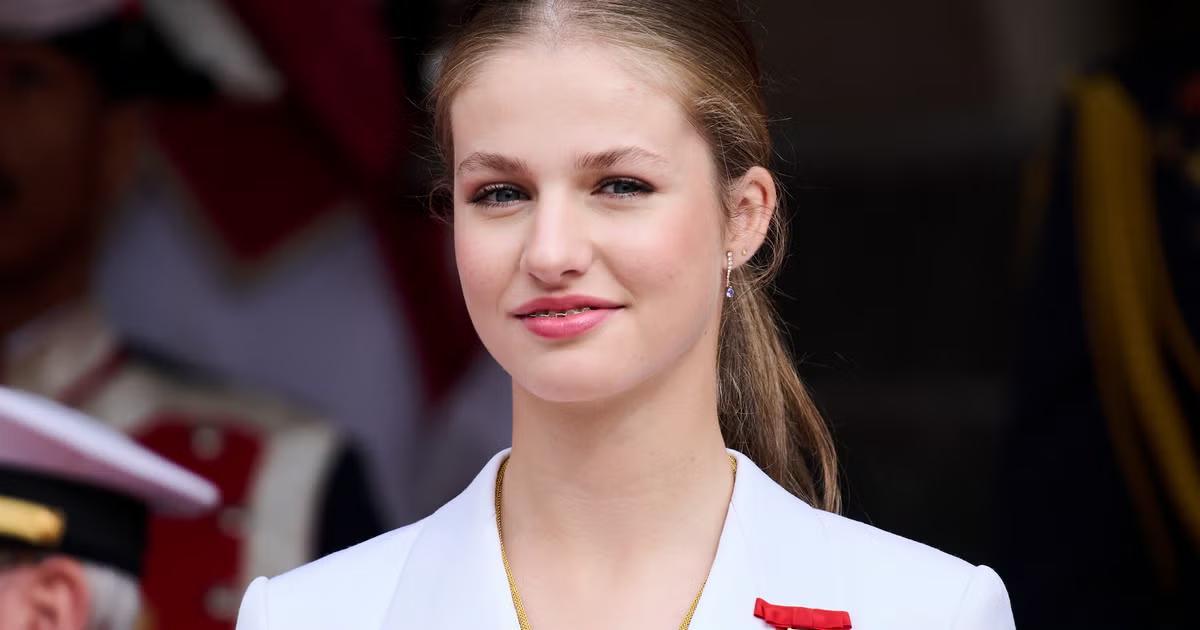
Leonor’s journey is full of symbolic milestones. By her mid-teens she was even playfully acknowledging her future role, once joking on camera about “becoming queen one day.” On her 18th birthday in October 2023 she fulfilled a key rite of passage by taking the oath in Spain’s Parliament to uphold the Constitution. This solemn moment publicly affirmed that she was ready for royal responsibility. Since then, Leonor has appeared more frequently at high-profile events – the Princess of Asturias Awards, National Day parades, and the Exemplary Town ceremony – learning protocol and gradually taking on representative duties.
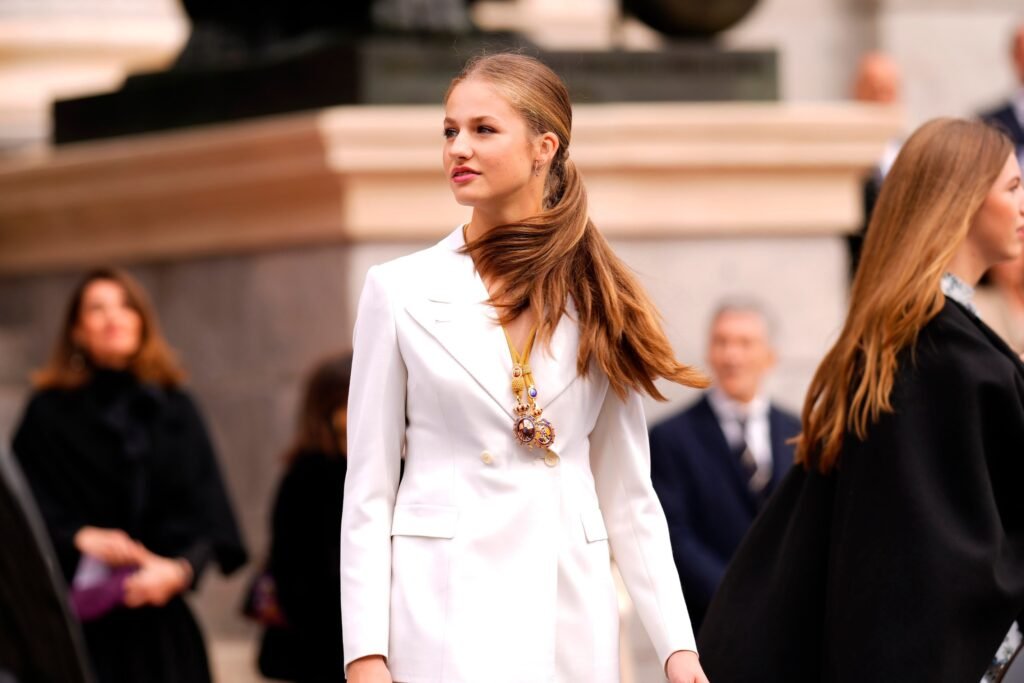
Despite the formality of these roles, Leonor also shows a natural warmth. She often greets citizens with a sincere smile and seems at ease at cultural or youth-oriented events. Even in her wardrobe choices, she signals a modern sensibility: she might favor a stylish pantsuit or a simple dress rather than elaborate court gowns.
Outside of official duties, Leonor’s personality shines through in small ways. She has long enjoyed sports like tennis and even learning languages other than English and Spanish. As a child she spoke eagerly about books and helping the environment, hinting at the causes she might champion in the future. Observers note these glimpses of her genuine curiosity and warmth—qualities that give ordinary Spaniards confidence that behind the royal title is a conscientious young leader.
Trailblazing Education: A Global Upbringing
Princess Leonor’s education has been deliberately international and future-focused. After secondary school in Madrid, she enrolled in the United World College Atlantic College in Wales (2021–2023), which offers the demanding International Baccalaureate (IB) program. Living in a dorm and learning alongside students from dozens of countries gave her a broad perspective. She tackled advanced courses in literature, history, and environmental science – subjects that sharpened her critical thinking.
By 2023 Leonor returned to Spain fluent in English and eager for the next challenge. This global schooling was unprecedented for a Spanish heir, but it fit a new era. Atlantic College alumni include world leaders and thinkers, and Leonor effectively graduated into that group. Today she is a bicultural, bilingual young leader: as comfortable addressing international forums in English as she is leading local community events in Spain. Her modern education signals that the future queen is prepared for real-world challenges.
At school Leonor reportedly excelled in languages and science, and classmates say she often volunteered to lead group projects. After her military training, Leonor may even pursue a university degree — a topic of speculation in Spanish media. (Will she choose law, international relations, or something new? She has kept her plans private for now, focusing on the tasks at hand.)
Her international schooling already sets Leonor apart from any past Spanish heir. In a way, it mirrors her mother’s path: Queen Letizia was the first Spanish queen from outside royalty, educated and independent, and she encouraged Leonor to be similarly worldly. This background suggests Leonor’s education will remain a strength long after she returns to Spain.
Military Training: Shaping a Commander-in-Chief
Military training is integral for a Spanish monarch, and Princess Leonor’s program is uniquely comprehensive. In August 2023, she began a three-year course spanning Army, Navy, and Air Force. First, she trained at Spain’s General Military Academy in Zaragoza alongside other officer cadets, learning infantry tactics, navigation, and leadership. Reports say Leonor tackled obstacle courses and marksmanship exercises with discipline on par with her classmates.
In late 2024 and early 2025, Leonor turned to the sea at the Naval Academy in Marín (Galicia). There she studied seamanship, navigation, and engineering. The highlight was a months-long global training voyage aboard Spain’s tall ship, Juan Sebastián Elcano. News images showed the princess in full naval uniform, even climbing the mast to unfurl sails — a picture of youth embracing tradition. In July 2025, King Felipe honored her with the Grand Cross of Naval Merit, recognizing her outstanding performance in naval training. Now Leonor has been promoted to second-class midshipman, one step closer to becoming a full officer.
Now in late 2025, Leonor is in her final year at the Air Force Academy in San Javier (Murcia). She is learning aviation fundamentals — from flight theory to parachuting — as she prepares to command the skies. Her instructors report she approaches these challenges with enthusiasm and responsibility.
Already this training has won Leonor real respect from the ranks. Officers report she never seeks special treatment and is often found asking detailed questions to improve her skills. During the year at sea, one crew member recalled the princess hauling on a deck rope alongside the other cadets — proof that she truly shared in the work. Leonor’s promotion to second-class midshipman is official, and after the Air Force course she will become a second lieutenant.
This hands-on preparation means that once she is queen, Leonor will fully know what it means to lead the armed forces. Many Spaniards say they imagine their future queen in uniform at international ceremonies or even aboard rescue missions. In Leonor, they see a monarch-in-the-making who will understand both the pomp and the real-life duties of the throne.
Leadership Style: Modernizing the Royal Role
Princess Leonor’s leadership approach reflects a blend of royal duty and civic responsibility, informed by her youth. Already she shows an admirable combination of politeness and genuine interest. In public events, observers note that she listens attentively and connects warmly with people she meets. When meeting award-winning scientists or humanitarians, Leonor often steps forward to shake hands and smile warmly, rather than standing aloof.
Her public speaking also reflects her modern style. In October 2025, at the Princess of Asturias Awards ceremony, Leonor welcomed international laureates to Oviedo in fluent Spanish, highlighting themes of intercultural dialogue and innovation. Though speeches at these events are usually brief, she appeared at ease behind the microphone – thanks in part to her academic background and confidence. King Felipe has noted that hearing Leonor address such gatherings is a sign she is “learning by doing.”
Leonor shows awareness of issues that resonate with her generation. She has made subtle gestures on topics like women’s empowerment and education. At a recent STEM conference, she praised Spanish students’ achievements and encouraged young women to pursue scientific careers. While remaining non-partisan (as required), she carries an aura of a princess who wants to use her platform positively.
Even in approach, she seems to modernize the royal role. Unlike some past monarchs who would wait for introductions, Leonor sometimes volunteers stories or jokes during informal moments, which surprises guests used to more rigid formalities. During local community visits, for example, she has relaxed to laugh with children and elderly residents alike, showing empathy and respect. These genuine, warm interactions suggest a leader who unites rather than distances.
People who meet Leonor often remark on her humility. Royal aides note that she learns everyone’s name and greets each person personally every morning — a warm habit that has become her hallmark. She also shows genuine interest in others’ stories. For instance, she once mentioned that a childhood trip to the Picos de Europa mountains sparked her love of nature. These authentic touches bolster her image as a sincere leader. Observers say Leonor’s quiet confidence and empathy suggest she will lead not just by command, but through inspiration.
In short, Leonor leads with courtesy and openness, mixing the dignity of royalty with the ease and curiosity of her generation. This inclusive style — listening carefully and inspiring trust — could reshape how a future queen leads in modern Spain.
Breaking Traditions: A New Era for the Monarchy
Princess Leonor is re-writing the royal script in many ways. Traditionally, Spanish royals maintained a very formal and reserved image, but Leonor is quietly redefining what a princess can be. For one, her very position as a woman in a historically male institution feels transformative. If she ascends to the throne, Leonor will be Spain’s first reigning queen with full constitutional powers, joining only a handful of female monarchs in world history. In a society that values equality, her gender symbolizes progress.
Leonor also defies the old “growing up behind curtains” model. From international schooling to active military service, her life is far less cloistered. She attends popular events – in 2023 she made an unofficial visit to a chart-topping concert in London (using a pseudonym) and reportedly enjoyed it like any other young adult. Though the press respect the royal privacy code and rarely report on those moments, they reveal Leonor has a normal side too. Her generation has Instagram and TikTok for a reason; she grew up in that era, and her measured interactions with media reflect it.
Fashion is another arena of subtle change: While Spain’s queens once adhered to strict ball gowns and tiaras, Leonor is happy to wear tailored blazers, sleek dresses, and even stylish boots. She’s not trying to be a celebrity, but when she does step out in public attire, photographers notice a confident simplicity rather than the ostentation of bygone eras. This more relatable image helps bridge monarchy with modern Spain.
Leonor’s approach to personal milestones shifts tradition as well. Her 18th birthday in 2023 was celebrated quietly with family rather than a grand public gala, signaling that she will blend personal life with duty on her own terms. The royal household intentionally releases no private photos of these celebrations, respecting her privacy. This restraint breaks from older royal norms and aligns her with younger generations; it tells Spaniards that Leonor’s life, while public, still holds personal space.
These departures from tradition have brought a wave of affection, often called “Leonormanía” in the Spanish press. Unlike past scandals that once rocked the Bourbon dynasty, Leonor’s image is almost scandal-free – a feat in itself. She has rebranded royal youth not as pampered aristocrats but as relatable young adults committed to their work. In short, Leonor is ushering in a new era for the Spanish monarchy: one where tradition and innovation walk hand in hand.
Royal Peers: How Leonor Compares to Other Young Royals
Princess Leonor is part of a generation of heirs who have more modern training and education than ever before. Across Europe and beyond, youthful princes and princesses are embracing international study, advanced degrees, and hands-on leadership roles in ways that kings and queens of the past rarely did. One can see the trend in each monarchy: young heirs now build résumés that resemble those of top executives or diplomats.
Below is a comparison of a few of Leonor’s royal peers, highlighting how each is preparing for leadership in their own way:
| Name | Country | Age (2025) | Title/Role | Education & Training | Notable Traits |
|---|---|---|---|---|---|
| Princess Leonor | Spain | 19/20 | Princess of Asturias; heir to the throne | International Baccalaureate (Atlantic College, UK); Army/Navy/Air Force training (2023–2025) | Fluent in English and Spanish; blending traditional duty with youth appeal |
| Princess Elisabeth | Belgium | 23 | Duchess of Brabant; heir to the throne | IB (Atlantic College, UK); BA in History & Politics (Oxford Univ., 2024); military academy training (Brussels) | Well-educated scholar; balancing academic excellence with military service |
| Ingrid Alexandra | Norway | 21 | Princess; heir to the throne | IB diploma; BA program (University of Sydney, Australia, from 2025); 15-month military service | Studying abroad; engaging with global politics; early military experience |
| Catharina-Amalia | Netherlands | 21 | Princess of Orange; heir to the throne | BSc in Politics, Psychology, Law & Economics (Amsterdam Univ., 2025); Defensity College military course (2 years) | Multilingual (Dutch, English, Spanish, Mandarin); active in social causes |
| Crown Prince Christian | Denmark | 19 | Crown Prince; heir to the throne | Danish secondary education; one-year lieutenant training (Guard Hussar Regiment, 2025) | Blending royal duties with youth culture (e.g. attending music festivals); down-to-earth image |
From this comparison, a clear picture emerges: today’s heirs tend to blend advanced education, international experience, and even compulsory military training. Princess Leonor’s journey (Atlantic College IB diploma and comprehensive armed-forces training) mirrors what we see with Belgium’s Elisabeth (Oxford graduate plus army academy) or Norway’s Ingrid (15 months of service followed by overseas study). Even Denmark’s young royals mix university with full-scale military courses.
This shift toward globalization and military readiness among heirs reflects a broader trend: monarchies see that their heirs must earn genuine respect. No longer can future kings and queens coast on name alone. Spain’s Princess Leonor is very much on par with the best-prepared heirs worldwide. Her path exemplifies how one modern heir is matching, and even exceeding, the benchmarks set by her counterparts. The message is clear: in the 21st century, a crown must be earned through experience as much as inherited.
Public Persona: Media Presence and Personality
In Spanish media, Leonor’s first major speech (at the 2025 Princess of Asturias Awards) was praised as “poised and sincere.” She has since remained cautious on political subjects, focusing on broadly popular causes like education and scientific progress. When she does highlight fundamentals such as the Constitution or youth issues, journalists treat it as evidence of her maturity and sense of duty.
Still, Leonor’s playful, empathetic side often shines through. On one community hospital visit she gently knelt to adjust a young child’s shoe, a simple act of kindness that made headlines and charmed the public. Such spontaneous gestures – along with warm smiles and genuine laughter during conversation – give her a relatable, humanized image that many find endearing.
Official images of Leonor frequently go viral online. Fans admire her modern style — from smart tailored suits to uniform jackets — calling it a “modern princess” look. Even without a personal Instagram or TikTok, she inspires a kind of “Leonor mania”: enthusiasts create hashtags, fan art, and discussion threads celebrating the down-to-earth, approachable persona she projects.
She also shines in unscripted moments. For example, at a Spanish science conference in 2025, Leonor thanked researchers for their work in climate and health, delivering a brief but sincere message of support. Reporters observed that even in these settings she listens carefully and often shares an encouraging word. When the press asks about reforms or politics, Leonor stays diplomatically neutral, avoiding controversy. Coverage instead focuses on her calm presence and sense of purpose.
Internationally, Leonor is becoming notable as well. Royal watchers in Europe point out that she speaks fluent English and has a training schedule that would impress even some heads of state. American magazines have already featured human-interest stories about her unique blend of princess duties and cadet life, noting that she represents a “new face of monarchy” on the world stage.
Overall, Princess Leonor’s media presence blends the dignity of royalty with the authenticity of youth. She walks a fine line — embodying steadiness and respect for tradition, yet connecting easily with common people and young audiences. Her public persona is that of a leader who listens, learns, and keeps a warm smile ready, a combination that modern viewers find compelling.
Looking Forward: The Future Queen’s Impact
As Princess Leonor approaches adulthood, all eyes are on how she will steer the monarchy into the future. With decades of potential reign ahead, her choices could reshape one of Spain’s oldest institutions. One likely area of impact is gender and succession. Currently, Spanish law still favors male heirs, but public debate is stirring about changing this to allow absolute primogeniture. If the law is updated, Leonor could herself become a symbol of gender equality on the throne — an inspiration to young women across the nation.
Another area is social engagement. Leonor’s upbringing suggests she’ll champion issues like quality education, science, and cultural exchange. She may encourage the royal household to be more transparent and modern, possibly introducing digital town halls or youth summits. It’s easy to imagine her answering questions from young Spaniards online or supporting tech start-ups through her foundation. Her vision of service to Spain is likely pragmatic and inclusive.
In coming years, Leonor may also take on more diplomatic roles. Observers expect that by her mid-20s she will begin official tours abroad, promoting Spanish culture and strengthening ties in Latin America and Europe. Analysts already compare her to other well-educated young heirs; it wouldn’t be surprising to see her attending global summits or youth leadership forums alongside her parents. These experiences will further raise her profile and polish her skills as a future sovereign.
Looking further ahead, Spain’s monarchy may evolve significantly by the time Leonor is queen. In the 2030s she will likely be a veteran of state visits, co-hosting summits and cultural exchanges. By her late twenties she is expected to marry; that royal wedding will surely blend Spain’s pageantry (cathedral vows, historic tiaras) with modern fanfare (a live-streamed ceremony and global media buzz). Younger Spaniards today are already imagining dressing up to watch the celebration.
There are also big questions facing her generation. Spain’s regional diversity and social change mean a future monarch must be a unifying figure. Leonor has already shown sensitivity by learning greetings in Catalan and Basque during visits — a thoughtful approach that hints she will strive to be princess of all Spaniards. Internationally, specialists wonder if her reign will become a model of a modern “cyber monarchy,” where a queen rules as much through relatable values and digital presence as by ancient privilege.
In essence, what happens next will be watched closely. Some see Princess Leonor’s story as a test case: will a well-prepared, globally-minded heir make the monarchy more relevant? If her track record is any indication, the answer is hopeful. By combining preparation with empathy and innovation, Leonor has the potential to demonstrate how a constitutional crown can adapt in the 21st century. The coming years will show exactly how brightly Spain’s young future queen can shine.
< Previous Post Next Post >
Conclusion: The Next Chapter of the Spanish Monarchy
Princess Leonor stands at the threshold of a new chapter for Spain’s monarchy. By blending rigorous traditional training with a fresh, youthful outlook, she is already reshaping what it means to be a future queen. Her global education, military service, and modern leadership style break from old royal archetypes, yet her deep sense of duty ensures continuity with Spain’s history. In Leonor we see centuries of heritage and the promise of the future interwoven.
In 2025, Spain’s young princess seems uniquely poised to bridge the old and the new. Whether wearing a crisp uniform or a contemporary suit, giving a composed speech or sharing a genuine smile, Leonor personifies a monarchy ready for the 21st century. Her journey suggests that the era of the distant, untouchable princess is ending, replaced by a sovereign who connects with people of all generations. The compelling takeaway is that Princess Leonor may redefine modern royalty itself, proving that tradition and innovation can coexist and strengthen each other.
As Spain looks ahead, the question is not just when Leonor will become queen, but what kind of queen she will be. All signs so far indicate she will be one of change — quietly, steadily transforming royal duty into something new and inspiring. The future of the Spanish crown lies in her youthful hands, and in 2025 it has never looked brighter.