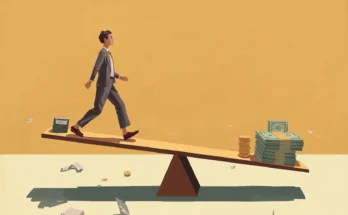
How Athletes Can Retire With a Better Lifestyle
Today we’re going to talk about how an athlete can live a better lifestyle in retirement than they do during their playing career. And they can do all this without hitting a home run investment, but by simply having the right system in place. I’ve seen this system work because it’s the same system I followed during my playing career to build wealth. It’s the same system I’ve guided dozens of athletes through to make sure they’re making the most of their opportunity set while they’re playing. This isn’t built for everybody. This is a system that’s built for the 1% of the 1%.
The athlete that has an incredibly short earning window but has decades to live after they get done playing.
$30 million. It is generational money. There’s absolutely no denying it. And if anybody says otherwise, they are completely full of it. But as a professional athlete, you’re facing this weird conundrum where there are two major issues at play.
Why $30 Million Can Disappear Faster Than You Think
Issue number one, you’ve never experienced any money like this. And you’re going to get it all at once. You’re going to get it in the first decade of your life. Compound that with the fact that you might be making millions of dollars a year, and you can quickly see how this problem can become a major issue for an athlete down the road. You’re making these decisions on millions of dollars with no experience that are going to affect you for the rest of your life.
The Second Problem
The second problem, which continues to compound the first, is that you are now in a locker room with players that are earning $25 or $30 million a year. You’re in a locker room with players who have survived all the odds. They didn’t just get to the highest level. They’ve been there for 5, 10, 15 years. They might have $50 or $100 million saved, but you’re sitting across the locker room and you’re seeing the watch that they have. They’re talking about the vacation that they went on in the offseason. They’re talking about the car that they just got delivered to the clubhouse, paid full sticker price, and it’s now sitting in the parking lot. You can understand how $30 million, while it’s generational money, can quickly go away like that.
The Compounding Lifestyle Trap That Takes Down Even the Highest Earners
When it comes to athlete spending, one of the biggest misconceptions that I see over and over is that all of a sudden it just goes away. It’s poof, it’s gone. But it’s not like that.
The issue that athletes face is this slow fade over time. We talk a lot about compounding in a positive way, but when I think about lifestyle and spending and all these bills piling up over time, compounding can go the other way, too. And that is what happens for most athletes. When we see an athlete on 30 for 30 broke, usually it’s not one single decision they made. They didn’t buy the most expensive Lamborghini and lose all their money. They bought one car and then they bought two. Then they bought three. Then they traded them all in. Then they bought the second house.
Then they went on the vacation they shouldn’t have gone on. Then they started supporting every single family member and before you knew it, they were looking at their paycheck and saying, “I’m making a million dollars a year, but I have absolutely nothing to show for it.” Because the truth is, for an athlete, it’s a slow fade to bankruptcy. It’s not a quick hit. When an athlete walks into our office and we start talking about their numbers, the first thing I want them to understand about that $30 million they’re going to make during their career is what they’re actually going to take home.
What $30 Million Actually Looks Like After Taxes, Agent Fees, and Expenses
Agent fees are going to be somewhere between 3 and 5%. In this example, that’s about $1.2 million right off the bat. Then there’s the top federal tax rate, which is 37%. And state income taxes will range anywhere from zero all the way up to north of 13% if you’re in California. After everything, a player is fortunate in this situation to take home roughly 55% of what they make. This is after agent fees and taxes and all the other things that come out of your paycheck before it ever hits your bank account. So on that $30 million you make throughout your entire career, it’s about $16.5 million of take-home pay. The biggest check you’re ever going to write is to the IRS.
Player A: Mike
Let’s say we have two players. They both made $30 million. Let’s call player A Mike. Mike decides that he’s going to live a great life while he’s playing. He’s looking across the locker room and seeing the other guy and he wants to have exactly what that guy has. And he does some math and says, “Well, if I save 20% of my income, they say that’s really good.”
And the truth is, for an average person, that framework is really good. But for an athlete, it’s totally backwards. So Mike decides that he’s going to spend 80% of his take-home pay. That’s $1.32 million a year, living a really nice lifestyle. He’s saving the other 20%, which is $330,000 per year. The simple math on this, you’re thinking, I’m saving $330,000 per year. I’m doing great. Now look at player B. Let’s call player B Justin. Justin is over here saying, well, I saw that math, but Jacob told me that I should flip that on its head.
The 80/20 Flip: Why the Standard Savings Advice Is Completely Backwards for Athletes
That’s the first part of this framework: we have to understand the actual math that works for an athlete. It is flipped completely on its head from what you might understand in personal finance for anybody who isn’t an athlete. You want to save 80% and spend 20%. So what does that math look like? Well, Justin is saving $1.32 million per year while he’s playing. As for his lifestyle, don’t worry about Justin. He’s still living fine on $330,000 per year. An incredible lifestyle. Maybe not the same as the guy across the locker room, but Justin’s thinking forward. Mike is only thinking about what he’s doing today.
The Forever Number
And that right there is the second part of this framework that every athlete needs to understand. We need to be thinking about not just the amount of money that we’re saving in a given year. What we really need to be thinking about is what our forever number is going to look like. What do I mean by our forever number? Our forever number is the amount of money that we have saved multiplied by a safe withdrawal rate. A safe withdrawal rate means how much money I could take out of my portfolio every single year without touching the initial principal.
It’s how much snow I could take off the snowball as it rolls down the hill without making the snowball so small that I can’t take any snow off in the future. That’s the way I want every athlete to think about it. It’s the same way I talk to every athlete that comes into our office. So the math we need to understand is that we have Mike on one side and Justin on the other. Mike saves 20% and Justin saves 80%. What do they end up with in terms of their forever number? Mike has saved about $4.35 million over the course of his 10-year career. Sounds like a lot of money until you start doing the math on the forever number.
How to Calculate Your “Forever Number” and Why It’s the Only Number That Matters
$4.35 million times 3%, which is the starting safe withdrawal rate that we use for an athlete. It can go higher. It also can go lower. There are a lot of variables that come into play here, but 3% is a solid baseline for somebody who’s going to have 60 to 70 years in retirement. Mike is now spending $130,500 per year from his portfolio. Still a decent amount of money, but when you consider that his lifestyle before was $1.32 million a year, you start to see where the issue comes into play. The house that he has, the cars that he drives, the vacations that he goes on, the school that his kids go to, all those things are now out of reach.
And to make matters even worse, that’s a pre-tax number. When you start adding in taxes, you might be talking about a number closer to $105,000 in actual spending that Mike will have to live on. And you start to understand the issue he’s going to have in the future.
Justin’s Forever Number
Remember, Justin was looking across the locker room, still living a really nice life, but maybe not wearing the same thing on his wrist as his teammates. Maybe not buying the same cars every year, maybe not going on the same vacation in the offseason, but still a great life. He was also saving $1.32 million along the way. So when he got done playing, he had $17.4 million saved. Let’s talk about his forever number. He could pull a little more than $500,000 off his portfolio every single year, and on paper that should last without running out of money. Reduce that to an after-tax number and you’re still talking in the high $400,000s that he’s actually able to spend.
And quickly you understand that Justin made the wise move. Justin, because he followed this framework, can spend more money in retirement than he was spending in his playing career. Mike is over here kicking himself. There are no do-overs with this. When I talk about Mike and Justin’s story, it’s easy to think of these as hypothetical athletes. These are real athletes. These are people that I’ve worked with. I’ve seen this exact situation come up time and time again. And it’s never because Mike bought the most expensive Lamborghini. No, it was this slow fade. He started building the lifestyle and over time it became unsustainable.
And when he got done, he had to have a conversation with somebody like me to hear that we can’t even afford that lifestyle anymore. It is much more fun for me to have the conversation with Justin and tell him we can actually live a better lifestyle. We can spend more money. We can turn that money dial up in the area you love the most because of what we did 10 years ago. When I talk about this system for athletes, what I mean is that it’s specific to you. If you go out and look at a personal finance calculator and ask it how much you should save, it’s probably going to tell you somewhere between 15 and 20%.
Why Athletes Only Get One Shot to Do This Right
That’s spot on for most people, but as an athlete, I’m going to tell you right now, if you don’t flip that on its head, you could be in a world of hurt when you get done playing. Because the truth is, we have a short earning window. We have one shot to do it right, and we have decades when we get done playing. My advice to you as an athlete is to treat every dollar like it’s going to be the last. Build this framework into everything you do with your money and understand what your forever number is, because it doesn’t really matter what you have saved.
You need to know what you could actually spend off that money when you get to retirement. Because if I know anything, you’ll be a former player a lot longer than you’ll be a current player.