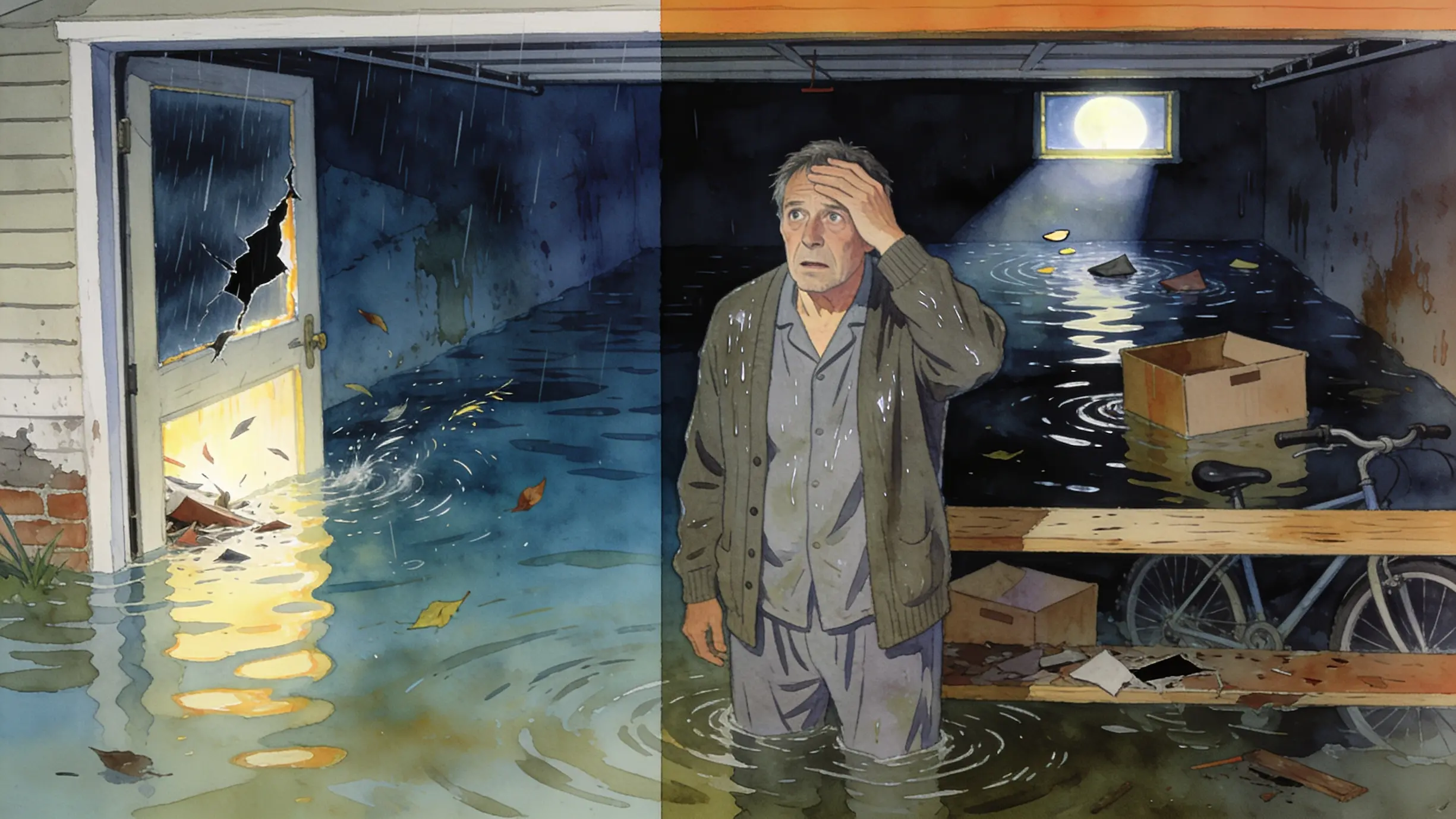
Three years ago, I stood in my garage at 2 a.m. watching water rise over my ankles. I kept asking myself why my “full coverage” home insurance wasn’t going to pay for any of it.
That night, I finally understood the difference between storm damage and flood damage. Before that, I thought they were the same thing, covered by the same policy. They are not. That mistake cost me almost $14,000 out of my own pocket.
If you’re shopping for storm or flood coverage right now, or you just want to know why your agent keeps saying “you need a separate flood policy,” I want to save you from the trouble I went through. This isn’t a copy-paste top-10 list. It’s what I learned from filing claims, comparing quotes in different states, and talking to more insurance adjusters than I ever wanted to.
Storm Damage and Flood Damage Are Not the Same Thing
Here’s something a lot of people don’t know: a normal home insurance policy covers wind, hail, and rain that gets in through a broken window or damaged roof. That’s storm damage, and most policies handle it fine.
Flooding is different. This means water rising up from the ground, a storm surge pushing in from outside, or a river spilling over. Most standard home insurance policies do not cover this at all. You need a separate flood insurance policy through a program like FEMA’s National Flood Insurance Program (NFIP) to be protected.
That one fact is the whole reason my garage flood turned into a financial disaster. I had wind coverage. I did not have flood coverage. Same storm, two very different results, depending on which kind of water reached my things.
This mix-up is more common than you’d think. Almost a quarter of homeowners living in a flood zone don’t have flood insurance. And here’s the surprising part: a lot of flood claims come from homes that were never even marked as “high risk” to begin with. You can check your own risk level for free using FEMA’s Flood Map Service Center.
Step 1: Figure Out What You Actually Need Covered
Before you compare any companies, split your risk into two simple groups:
- Wind, hail, tornadoes, hurricane gusts. This is windstorm coverage. It’s usually part of your normal home insurance policy or added on top of it.
- Rising water, storm surge, overflow. This needs a separate flood policy, either through NFIP or a private flood insurance company.
I skipped this step the first time. I just assumed my agent had already covered everything. Don’t make that assumption. Ask directly: “If two feet of water gets into my basement from outside, am I covered?” If they pause before answering, that tells you something.
Step 2: Get Home Insurance Quotes From at Least 3 Companies
After my flood, I got quotes from several companies, online and over the phone. Comparing quotes side by side is the easiest way to see how much your price can change between companies for the same coverage. A few names came up again and again as solid choices for storm-heavy areas:
Amica: This company keeps showing up as a top pick for home insurance overall, mostly because of strong customer service and high marks for handling claims.
State Farm: The biggest home insurance company in the country. It has a huge network of local agents, which really matters when you need to reach a real person during hurricane season.
Nationwide: Often recommended for people in storm-prone areas. This was one of the first names on my list after I moved somewhere with real hurricane risk.
Allstate: Offers flexible policy options, plus a “Claim RateGuard” feature that stops your price from jumping after you file a claim. One thing to know: some surveys give Allstate a lower score for claims handling, and it gets more complaints than expected according to the National Association of Insurance Commissioners (NAIC). Not a dealbreaker, but worth keeping in mind.
USAA: If you or someone in your family served in the military, this one is almost always the cheapest option with some of the highest satisfaction scores. It’s frustrating that it’s only for military families, but if you qualify, check it first.
Chubb: Built for bigger, higher-value homes. Their Masterpiece policy offers extra features like risk advice and a cash payout option if you decide not to rebuild after damage. It’s not cheap, though. Chubb is known as one of the more expensive home insurance companies out there.
Step 3: Shop for Flood Insurance Quotes Separately
This is the part most people get wrong, including me at first. You don’t just add flood coverage to your home insurance policy. You buy it as a completely separate policy. Get quotes from both the government program and private companies before you decide.
NFIP (National Flood Insurance Program): Backed by FEMA and available almost everywhere there’s flood risk. The downside is that coverage limits are low. The most you can get is $250,000 for the structure and $100,000 for your belongings. If your home is worth more than that, you have a gap.
Chubb Flood: Works alongside their home insurance policy and goes far beyond NFIP limits. You can get up to $15 million in combined home and contents coverage. One feature I really like: Chubb gives up to $5,000 to flood-proof your home or move your things if a flood warning is issued. That kind of early help would have saved me a lot of stress.
Neptune Flood: An online-first private flood insurance company known for fast digital quotes. Many independent agents say it’s one of their top choices because it can approve a policy much faster than NFIP’s paperwork process.
National General: A private flood option backed by Allstate. Worth checking if you want a bigger, well-known name behind a private policy. It averages around $669 a year, and there’s no waiting period at all for new coverage in Florida and New Jersey.
Kin: If you live in Florida, this one is worth a look. It adds flood coverage directly onto your home policy, so you’re not juggling two separate companies. Kin says its average flood policy in a low-risk zone costs as little as $175 a year, though prices go up a lot in higher-risk areas.
The Waiting Period Mistake I Made (Don’t Do This)
I tried to buy flood insurance the same week a storm was already headed our way. Big mistake. Insurance companies will not sell you new flood coverage once a named storm is already forming. This is called a moratorium. It stops people from buying insurance right before disaster strikes, which makes sense from their side.
On top of that, NFIP policies usually take 30 days to start working after you buy them. Private companies are different. Some, like National General in certain states, have no waiting period at all. But you can’t count on that everywhere.
The lesson: buy flood insurance during calm weather, not the week the news starts saying “landfall.”
Common Mistakes People Make (Mine Included)
- Assuming home insurance covers flooding. It almost never does.
- Only getting one quote. The same house can get prices that differ by hundreds of dollars a year between companies, even with the same coverage.
- Matching coverage to your mortgage instead of your rebuild cost. What your lender requires and what it would actually cost to rebuild your home are two very different numbers.
- Waiting until a storm is already in the forecast. By then it’s too late. The policy simply won’t start in time.
- Not checking your flood zone. FEMA’s flood maps are free to check, and a large share of flood claims come from homes outside the “official” high-risk zones.
- Forgetting basement contents. Many standard flood policies, including NFIP, don’t cover finished basements or the things stored inside them. That’s exactly where my damage happened.
A Simple Way to Do This Step by Step
- Check your flood zone using FEMA’s flood map tool. It takes about two minutes.
- Get 3 home insurance quotes with the same coverage details (same dwelling amount, same deductible, same liability limit) so you’re comparing fairly.
- Get at least 2 flood insurance quotes, one from NFIP and one from a private company like Neptune, Chubb, or National General.
- Ask each flood insurance company directly about waiting periods and basement exclusions.
- Buy your coverage before storm season starts, not once it’s already underway.
- Re-check both policies every year at renewal. Prices change more than people expect.
Quick FAQ: Home Insurance Quotes for Storm and Flood Coverage
How do I compare home insurance quotes for storm-prone areas? Get at least three quotes with the exact same details (same dwelling coverage, same deductible, same liability limit). Then compare each company’s windstorm and named-storm deductible on its own. Comparing quotes with different coverage levels is the main reason people think one company is “cheaper” when it’s really just offering less protection.
Are flood insurance quotes and home insurance quotes the same thing? No. You need to ask for flood insurance quotes separately, either from an NFIP agent or a private flood company like Neptune Flood or Chubb. Some companies let you bundle billing, but the pricing and approval process are handled separately.
Can I get cheaper home insurance by bundling home and auto coverage? Usually, yes. Most big companies, including State Farm, Allstate, Nationwide, and USAA, give you a discount when you bundle your home and car insurance together. It’s one of the easiest ways to lower your yearly cost without cutting coverage.
Is private flood insurance cheaper than NFIP? It depends on your flood zone. In lower-risk areas, private flood companies can beat NFIP’s prices by a lot. In high-risk areas with a long claims history, NFIP is sometimes the better, or only, option. Always compare both before deciding.
How often should I check for a better home insurance rate? Every year at renewal, and also after any big life change, like a new roof, a renovation, paying off your mortgage, or moving. Prices shift often based on storm activity in your area, so the best deal this year might not be the best deal next year.
Final Thoughts
I don’t think there’s one single “best” company for everyone, and I’d be a little suspicious of anyone who says there is. What worked for my house (older, coastal, with a finished basement) isn’t going to be right for a newer home inland with no flood risk at all.
Here’s what I can tell you: getting both policies right matters more than picking a big brand name. Choose a windstorm insurer that actually picks up the phone during a hurricane. Get your flood policy sorted early and separately. And don’t be shy about comparing rates from two or three companies before you commit. The gap between the cheapest and most expensive quote for the same exact house is bigger than most people think.
That flooded garage taught me more about insurance in one night than ten years of paying premiums ever did. I hope this helps you skip that lesson, and maybe get a better rate along the way.
This article is for general information only and reflects publicly available details as of 2026. Coverage, pricing, and availability change by state and by property. Always get a personal quote and read the actual policy documents before you buy.Best Home Insurance Companies for Storm and Flood Coverage (What I Learned the Hard Way)
Three years ago, I stood in my garage at 2 a.m. watching water rise over my ankles. I kept asking myself why my “full coverage” home insurance wasn’t going to pay for any of it.
That night, I finally understood the difference between storm damage and flood damage. Before that, I thought they were the same thing, covered by the same policy. They are not. That mistake cost me almost $14,000 out of my own pocket.
If you’re shopping for storm or flood coverage right now, or you just want to know why your agent keeps saying “you need a separate flood policy,” I want to save you from the trouble I went through. This isn’t a copy-paste top-10 list. It’s what I learned from filing claims, comparing quotes in different states, and talking to more insurance adjusters than I ever wanted to.
Storm Damage and Flood Damage Are Not the Same Thing
Here’s something a lot of people don’t know: a normal home insurance policy covers wind, hail, and rain that gets in through a broken window or damaged roof. That’s storm damage, and most policies handle it fine.
Flooding is different. This means water rising up from the ground, a storm surge pushing in from outside, or a river spilling over. Most standard home insurance policies do not cover this at all. You need a separate flood insurance policy through a program like FEMA’s National Flood Insurance Program (NFIP) to be protected.
That one fact is the whole reason my garage flood turned into a financial disaster. I had wind coverage. I did not have flood coverage. Same storm, two very different results, depending on which kind of water reached my things.
This mix-up is more common than you’d think. Almost a quarter of homeowners living in a flood zone don’t have flood insurance. And here’s the surprising part: a lot of flood claims come from homes that were never even marked as “high risk” to begin with. You can check your own risk level for free using FEMA’s Flood Map Service Center.
Step 1: Figure Out What You Actually Need Covered
Before you compare any companies, split your risk into two simple groups:
- Wind, hail, tornadoes, hurricane gusts. This is windstorm coverage. It’s usually part of your normal home insurance policy or added on top of it.
- Rising water, storm surge, overflow. This needs a separate flood policy, either through NFIP or a private flood insurance company.
I skipped this step the first time. I just assumed my agent had already covered everything. Don’t make that assumption. Ask directly: “If two feet of water gets into my basement from outside, am I covered?” If they pause before answering, that tells you something.
Step 2: Get Home Insurance Quotes From at Least 3 Companies
After my flood, I got quotes from several companies, online and over the phone. Comparing quotes side by side is the easiest way to see how much your price can change between companies for the same coverage. A few names came up again and again as solid choices for storm-heavy areas:
Amica: This company keeps showing up as a top pick for home insurance overall, mostly because of strong customer service and high marks for handling claims.
State Farm: The biggest home insurance company in the country. It has a huge network of local agents, which really matters when you need to reach a real person during hurricane season.
Nationwide: Often recommended for people in storm-prone areas. This was one of the first names on my list after I moved somewhere with real hurricane risk.
Allstate: Offers flexible policy options, plus a “Claim RateGuard” feature that stops your price from jumping after you file a claim. One thing to know: some surveys give Allstate a lower score for claims handling, and it gets more complaints than expected according to the National Association of Insurance Commissioners (NAIC). Not a dealbreaker, but worth keeping in mind.
USAA: If you or someone in your family served in the military, this one is almost always the cheapest option with some of the highest satisfaction scores. It’s frustrating that it’s only for military families, but if you qualify, check it first.
Chubb: Built for bigger, higher-value homes. Their Masterpiece policy offers extra features like risk advice and a cash payout option if you decide not to rebuild after damage. It’s not cheap, though. Chubb is known as one of the more expensive home insurance companies out there.
Step 3: Shop for Flood Insurance Quotes Separately
This is the part most people get wrong, including me at first. You don’t just add flood coverage to your home insurance policy. You buy it as a completely separate policy. Get quotes from both the government program and private companies before you decide.
NFIP (National Flood Insurance Program): Backed by FEMA and available almost everywhere there’s flood risk. The downside is that coverage limits are low. The most you can get is $250,000 for the structure and $100,000 for your belongings. If your home is worth more than that, you have a gap.
Chubb Flood: Works alongside their home insurance policy and goes far beyond NFIP limits. You can get up to $15 million in combined home and contents coverage. One feature I really like: Chubb gives up to $5,000 to flood-proof your home or move your things if a flood warning is issued. That kind of early help would have saved me a lot of stress.
Neptune Flood: An online-first private flood insurance company known for fast digital quotes. Many independent agents say it’s one of their top choices because it can approve a policy much faster than NFIP’s paperwork process.
National General: A private flood option backed by Allstate. Worth checking if you want a bigger, well-known name behind a private policy. It averages around $669 a year, and there’s no waiting period at all for new coverage in Florida and New Jersey.
Kin: If you live in Florida, this one is worth a look. It adds flood coverage directly onto your home policy, so you’re not juggling two separate companies. Kin says its average flood policy in a low-risk zone costs as little as $175 a year, though prices go up a lot in higher-risk areas.
The Waiting Period Mistake I Made (Don’t Do This)
I tried to buy flood insurance the same week a storm was already headed our way. Big mistake. Insurance companies will not sell you new flood coverage once a named storm is already forming. This is called a moratorium. It stops people from buying insurance right before disaster strikes, which makes sense from their side.
On top of that, NFIP policies usually take 30 days to start working after you buy them. Private companies are different. Some, like National General in certain states, have no waiting period at all. But you can’t count on that everywhere.
The lesson: buy flood insurance during calm weather, not the week the news starts saying “landfall.”
Common Mistakes People Make (Mine Included)
- Assuming home insurance covers flooding. It almost never does.
- Only getting one quote. The same house can get prices that differ by hundreds of dollars a year between companies, even with the same coverage.
- Matching coverage to your mortgage instead of your rebuild cost. What your lender requires and what it would actually cost to rebuild your home are two very different numbers.
- Waiting until a storm is already in the forecast. By then it’s too late. The policy simply won’t start in time.
- Not checking your flood zone. FEMA’s flood maps are free to check, and a large share of flood claims come from homes outside the “official” high-risk zones.
- Forgetting basement contents. Many standard flood policies, including NFIP, don’t cover finished basements or the things stored inside them. That’s exactly where my damage happened.
A Simple Way to Do This Step by Step
- Check your flood zone using FEMA’s flood map tool. It takes about two minutes.
- Get 3 home insurance quotes with the same coverage details (same dwelling amount, same deductible, same liability limit) so you’re comparing fairly.
- Get at least 2 flood insurance quotes, one from NFIP and one from a private company like Neptune, Chubb, or National General.
- Ask each flood insurance company directly about waiting periods and basement exclusions.
- Buy your coverage before storm season starts, not once it’s already underway.
- Re-check both policies every year at renewal. Prices change more than people expect.
Quick FAQ: Home Insurance Quotes for Storm and Flood Coverage
How do I compare home insurance quotes for storm-prone areas? Get at least three quotes with the exact same details (same dwelling coverage, same deductible, same liability limit). Then compare each company’s windstorm and named-storm deductible on its own. Comparing quotes with different coverage levels is the main reason people think one company is “cheaper” when it’s really just offering less protection.
Are flood insurance quotes and home insurance quotes the same thing? No. You need to ask for flood insurance quotes separately, either from an NFIP agent or a private flood company like Neptune Flood or Chubb. Some companies let you bundle billing, but the pricing and approval process are handled separately.
Can I get cheaper home insurance by bundling home and auto coverage? Usually, yes. Most big companies, including State Farm, Allstate, Nationwide, and USAA, give you a discount when you bundle your home and car insurance together. It’s one of the easiest ways to lower your yearly cost without cutting coverage.
Is private flood insurance cheaper than NFIP? It depends on your flood zone. In lower-risk areas, private flood companies can beat NFIP’s prices by a lot. In high-risk areas with a long claims history, NFIP is sometimes the better, or only, option. Always compare both before deciding.
How often should I check for a better home insurance rate? Every year at renewal, and also after any big life change, like a new roof, a renovation, paying off your mortgage, or moving. Prices shift often based on storm activity in your area, so the best deal this year might not be the best deal next year.
Final Thoughts
I don’t think there’s one single “best” company for everyone, and I’d be a little suspicious of anyone who says there is. What worked for my house (older, coastal, with a finished basement) isn’t going to be right for a newer home inland with no flood risk at all.
Here’s what I can tell you: getting both policies right matters more than picking a big brand name. Choose a windstorm insurer that actually picks up the phone during a hurricane. Get your flood policy sorted early and separately. And don’t be shy about comparing rates from two or three companies before you commit. The gap between the cheapest and most expensive quote for the same exact house is bigger than most people think.
That flooded garage taught me more about insurance in one night than ten years of paying premiums ever did. I hope this helps you skip that lesson, and maybe get a better rate along the way.
This article is for general information only and reflects publicly available details as of 2026. Coverage, pricing, and availability change by state and by property. Always get a personal quote and read the actual policy documents before you buy.