Introduction to Digital Marketing Career Choices
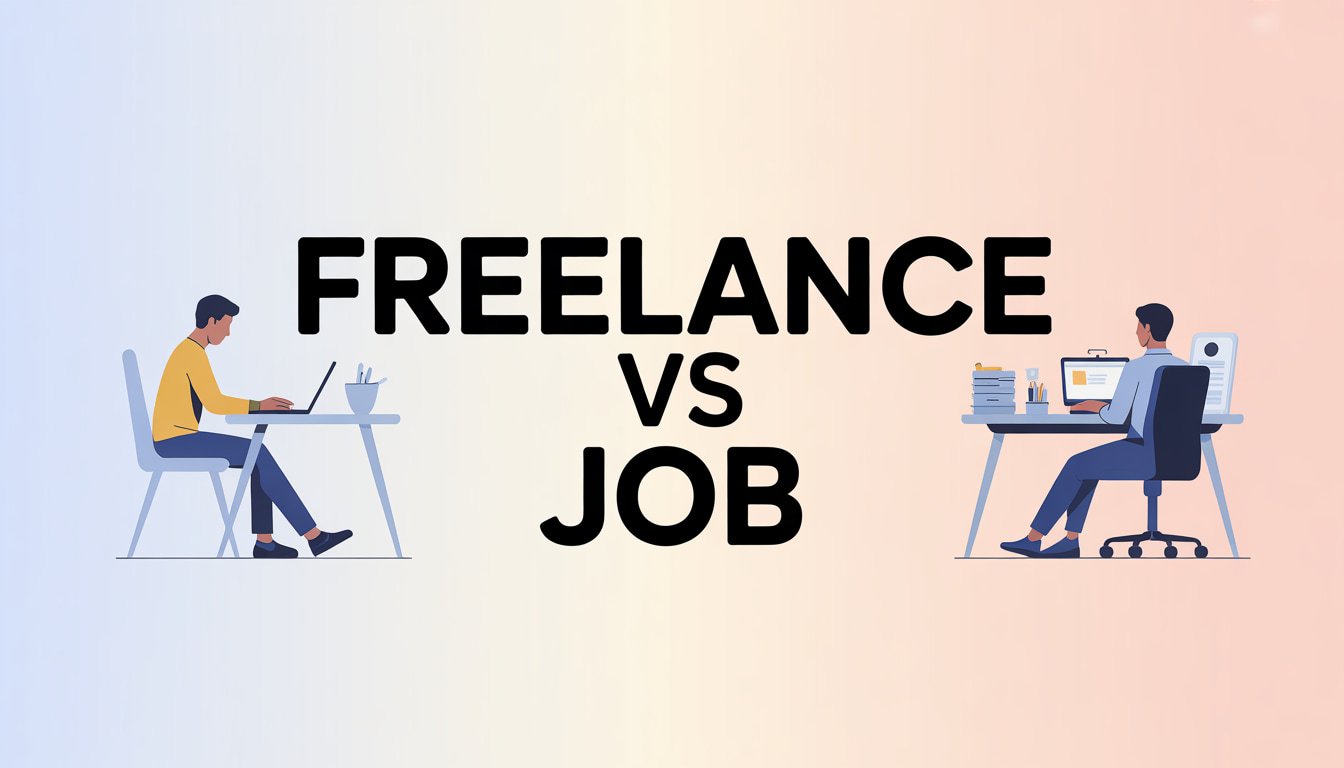
The difference between freelancing and having a full-time salary job, whether it be in-house or remote, is a common question. A lot of people ask what’s better should they start a career and try to get a day job, or should they start freelancing? Both are really great approaches to starting a career in digital marketing, and there are pros and cons to each. Learn More
Benefits of Working Within Agency Environments
Getting a day job or a salary job means being employed by a company or an agency. This means filling out the W2 a government form that gives the employer a social security number and related information, and gives the government and the employer the right to take out taxes. Employees often get health benefits and a lot of perks as part of being an employee.
This is a great way to start a career because these agencies and companies often provide a very supportive environment. There are co-workers that are more experienced, opportunities for learning from their experience, and often training, as well as perks like paid time off and health benefits.
Stable Income and Supportive Team Dynamics
The main benefit is a steady paycheck every week that has been agreed upon at hiring. There’s no need to worry about getting clients — the clients are already there. It’s a technical position, servicing accounts, helping with PPC or SEO.
That is the reason why a lot of students start out that way. There are so many jobs available because digital marketing continues to grow, and colleges still don’t teach digital marketing. Every year, millions of college students graduate with no marketable skills in this area, which makes it easier for people who do have the skills to get hired at these companies. It provides a sense of security, community, and a lot of other great things those are really the pros of working for an agency or a company.
Work-Life Balance and Salary Capping
The cons of working in a salary day job include the time commitment. These are full time jobs for the most part, 40 hours a week. The work life balance in digital marketing is much better than in other fields. There won’t be 60, 70, or 80 hour weeks like in finance, medicine, or law. In many cases the job can be remote, meaning the ability to work from home with that flexibility and no commute, but in some cases there may be a commute.
The other thing is being limited in terms of salary. It’s capped sometimes a bonus is included, but it’s very much a fixed amount. It’s steady and dependable but capped at a certain amount.
Exploring the Freedom of the Freelancing Model
The Sales Aspect of Independent Freelancing
Freelancing is when clients are found independently and a direct business relationship is established with them. With agencies or companies, a sales team or the company itself provides the clients, and the work simply gets done. When freelancing, it’s necessary to become a salesperson and go out and actually find clients.
Digital marketing is one of the easiest things to sell. It’s not like being a personal trainer or selling insurance every company needs digital marketing. A laid back approach works well. In any conversation with someone who works at a company, or especially a business owner, saying “I help people generate more leads and sales” quite often leads to “oh, what do you do?” and that becomes a very natural way of getting a client.
Natural Networking and Getting New Clients
Cold outreach is an option, as is going directly to people in person. There are many different networking groups and ways to get clients. Taking on the workload of getting clients is a real challenge, especially for those who are introverted or unfamiliar with sales.
There is a lot of work that goes into freelancing. People selling SMMA courses talk about how easy it is to get clients and how everybody needs Facebook ad help or Google Ads help and that’s true but it’s not like flicking a button and suddenly having all these clients. It is incredibly challenging to actually build and fulfill the needs of a client.
Challenges and Financial Rewards of Client Retention
Students who go the agency route use that experience to build the confidence and ability to do the work, which allows them to feel ready to go out and get clients themselves. Once there are clients, there is freedom, flexibility, and no earnings cap. A client paying $1,000 a month or $2,000 a month is just a starting point there can be as many clients as desired.
High Earning Potential and Unlimited Income Caps
With an actual direct client, it’s usually not necessary to work 40 hours a week for that one client. It may be 2, 3, 4, or 5 hours a week, which means clients can be stacked. With 10 clients at $1,000 $2,000 a month each, it’s possible to be making $20,000 a month — $200,000 a year or more. That’s a lot more than most salaries. It is possible to build up to that point.
Flexibility and Outsourcing in Freelancing
When it’s a personal client base, work can be done on a personal schedule with full flexibility. It’s also possible to outsource or hire a team of people to assist with the workload something that generally isn’t an option when working in an agency. Having a virtual assistant or someone doing some of the work helps reduce the workload. There’s a lot of freedom and flexibility with freelancing. It’s not 40 hours a week, there’s no 9 to 5, and that is very appealing and empowering for a lot of people.
Responsibility and Tax Burdens for Freelancers
On the flip side, there are no health benefits and none of the perks that come with a secure, stable job. There is full responsibility for the client base, and the security isn’t really there clients have to be kept happy, and at any time they can leave. There is a lot more responsibility when freelancing.
Tax-wise, there is an additional burden. When employed, the employer pays a portion of the taxes owed to the government. When freelancing and working for oneself, there is an additional self employment tax to pay, so there’s a bit more of a tax burden when it comes to freelancing.
Integrating Salary Stability with Freelance Growth
Supplementing Your Income with Side Projects
A salary job often provides security, community, and a supportive environment early on. The paycheck is going to come every week regardless of how the company is doing. At the same time, there isn’t as much freedom and flexibility there is a 40-hour work week and a cap on earnings. With freelancing, clients can be stacked and a significant income can be built. There is more freedom and flexibility, and being one’s own boss is a real possibility, but maintaining those clients is a responsibility, and there is a slightly additional tax burden.
Final Considerations for Choosing a Path
What most students do is start out with a salary job, get very confident in that, sometimes grab some freelance clients on the side to supplement their salary, and then when they feel very confident, they often quit and start their own freelancing business or a small agency.
A lot of this has to do with personality type and comfort level. For those who want the security of a day job and don’t want to worry about getting clients, that’s the path to take. For those who are more outgoing and want the challenge of seeing how many clients they can get, freelancing would be a better path. And of course, it’s possible to combine the two have a salary job and stack freelance clients on top of that to make even more money.
Success Examples in the Digital Marketing Industry
One example is a student who started around age 22 making about $80,000 a year at a salary job combined with freelance clients, and is now close to $100,000 nearly at $96,000 or $98,000. What’s great about digital marketing is that it provides so many options. Read More