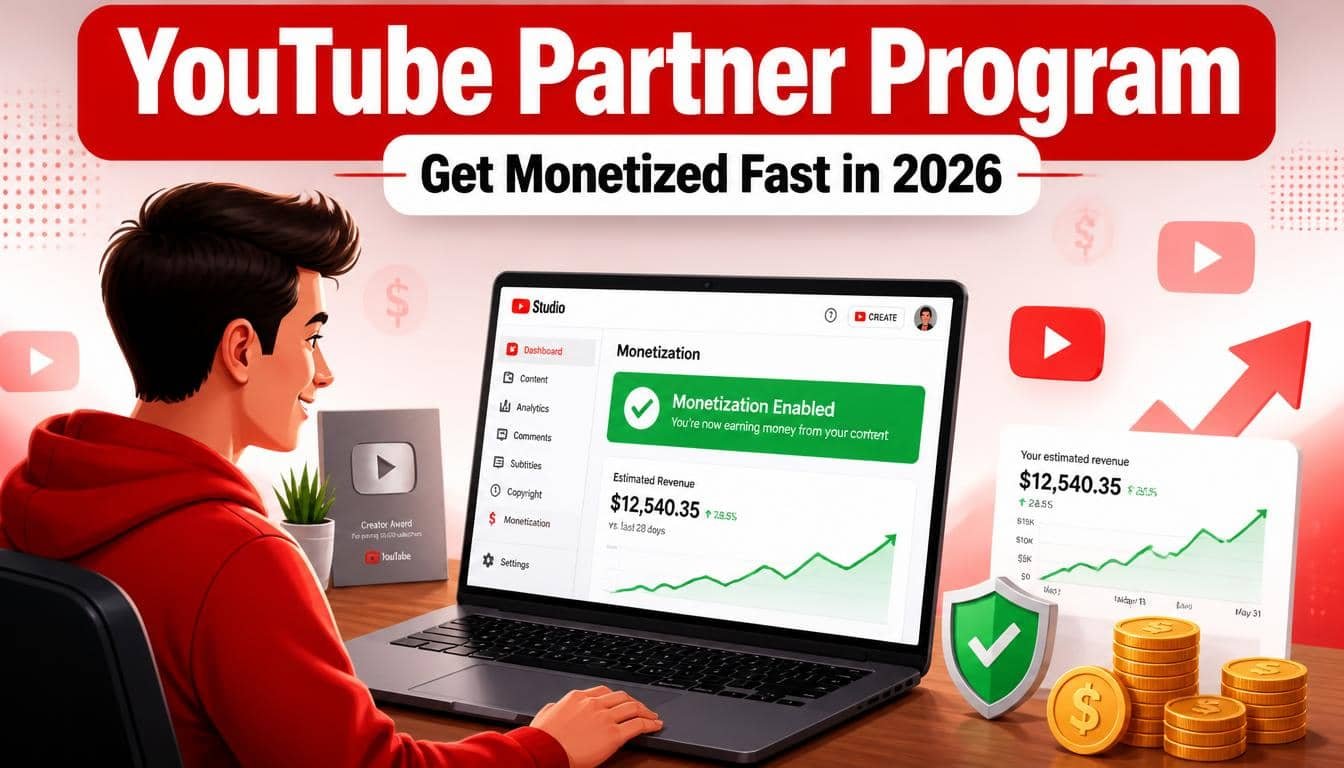
Most creators think YouTube monetization looks something like this. You upload some videos, eventually you hit 1,000 subscribers, then you hit 4,000 watch hours and you’re done. While those are the rules, monetization is actually a structure. If the foundation of your channel is not built correctly, it can fall apart completely. This guide will help you build a foundation and a structure that actually gets you paid on YouTube.
YouTube Channel Settings You NEED to Address
Before thinking about monetization, build a base. On YouTube, that foundation is your channel settings. A lot of creators rush through these. Get this part wrong and your channel may still reach monetization, but problems can show up down the road.
Two-Step Verification
First, go to the Earn tab in YouTube Studio. If you see a lock icon next to two-step verification, fix it first. You can’t apply for the YouTube Partner Program if this is off. A hacked channel can lose all of its videos and turn into one of those fake Tesla live streams. Secure your Google account. It is what keeps your channel from getting taken away overnight.
Advanced Features
Next, go to Settings, then Channel, then Feature Eligibility. Everyone should have standard features, and most creators should have intermediate features if they verified their phone number. Advanced features are the ones to check. If they are not unlocked, you can’t add clickable links to your video descriptions, which means no affiliate links, newsletter links, blog links, or merch links. That puts a big barrier in front of your income, so get this unlocked.
There are a few ways to do this. You can wait a few months, posting videos and building some channel history, which YouTube uses as one way of verification. Another way is to use the video verification tool. It asks you to look at your phone camera and turn your head to confirm you’re human. It can take a day or two to get a response, and once approved, advanced features are unlocked and the process doesn’t need to be repeated.
YouTube AdSense Account
Your AdSense account is next. If it isn’t set up right, it can delay your YouTube payments by up to 3 months. According to Google, only one AdSense account is allowed per person. If you started a blog back in high school or had a YouTube account 10 years ago, you could already have one. Creating a new AdSense account when you already have an old one results in a duplicate account error, which is difficult to fix.
Before you apply for monetization, search your email for the word AdSense. If the account is really old and you don’t remember the password, use that account anyway. Recover the password and reactivate it. If you’re sure you don’t have an AdSense account already, wait until YouTube prompts you to make one. Don’t make one ahead of time.
YouTube’s Monetization Requirements
That covers your foundation: your security settings, your feature access, and your AdSense setup. This alone does not make you money, but it makes the next phase possible, building your channel in a way that stays safe for monetization as you grow. First, the requirements for getting into the YouTube Partner Program. The requirements do change from time to time.
Early Access to the YouTube Partner Program
There are two main checkpoints on the path to monetization. The first is early access to the YouTube Partner Program. This is when you hit 500 subscribers. You also need at least three public uploads in the last 90 days, and either 3,000 public watch hours in the last year or 3 million Shorts views in the last 90 days. This level unlocks the fan funding features: Super Chats, memberships, shopping, and other features that depend entirely on the community you’ve built and how much they’re willing to pay.
Full Monetization
Reaching only the first tier is usually not enough to replace a full-time income. That’s why a lot of people aim for full monetization. This unlocks ad revenue, which means YouTube pays you as long as your videos are getting monetizable views.
How to Avoid Getting Demonetized on YouTube
Hitting these numbers does not mean monetization automatically turns on, even if you’ve set up your foundation. It means you’re eligible to apply. That is a big difference, because once you apply, YouTube reviews your channel. This confuses a lot of creators. They hit all the numbers, expect monetization, and then watch it fall apart. Monetization is not permanent, and it can be taken away at any time.
Viewers and Advertisers
For YouTube to make money, two things have to happen at the same time. Viewers need to be happy with the videos they’re served, and advertisers need to feel safe spending money on the platform. If you hit the requirements and follow YouTube’s guidelines, you should be monetized. YouTube looks at more than just the numbers. Whether a channel has already reached monetization or has simply applied for it, YouTube is always checking that its content meets the guidelines across the platform.
Breaking a YouTube Guideline
That checking goes on the entire time. In 2026, YouTube’s detection systems are more advanced than ever, and channels that have been building for a while get denied monetization regularly. It is usually for one reason: they’re breaking a YouTube guideline. Sometimes it’s unintentional, and sometimes creators push the limits a little. Even though many channels do this, YouTube doesn’t like it.
Transformative Content
A faceless automation channel that only pulls clips and posts them is not enough. Content has to be transformative in some way. Transformative creators often edit their content, add a narrative, or add their own commentary. They have something to say, and there’s a reason for each clip to exist.
Here’s a simple test. If you use a video clip but provide the audio, remove the video part. Does the audio alone, on a black screen, still add value? Do your points still get across? If the answer is no, the channel is still at risk. Taking a clip and putting some music under it is not enough.
A Clear Pattern
Channels that get demonetized usually show a clear pattern. YouTube takes its time with these decisions and goes after channels that consistently test the guidelines to see what they can get away with. YouTube does make mistakes, but in most of these cases the channel shows a consistent pattern of pushing the monetization guidelines too far.
Other Channels Still Monetized
Not every channel gets caught. Other channels may seem to do the same thing and still be monetized. Either they haven’t been caught yet, or there is more going on behind the scenes that isn’t visible. Either way, making content like this is a risk.
Safe at Scale
YouTube isn’t asking for a channel that is super impressive. It is asking for a channel that gets views and is safe for advertisers, so advertisers can run ads on the content. It has to be safe for advertisers and viewers, and it has to be safe at scale, because YouTube needs to do this for every single channel and every single video across the entire platform at the same time.
How to Get Monetized Faster on YouTube
With the foundation in good shape and videos being made for a while, the question becomes what the fastest way to get monetized is. Aside from regular videos, two other types of content come up often: Shorts and live streams.
Shorts
Shorts are great for discovery and a good way to get a lot of views quickly, especially with good storytelling. You can pick up subscribers fast, and those subscribers do count toward the 500 and 1,000 subscribers needed for the YouTube Partner Program. However, watch time earned from Shorts does not count toward the 4,000 hours needed for the full YouTube Partner Program. A Shorts-only strategy without millions of views does not optimize a channel for monetization. It optimizes for the subscriber requirement, but the watch time isn’t counting.
Shorts Viewer Mindset
The Shorts viewer mindset also matters. Viewers swipe, scroll, and sample content, and they don’t really commit to any one creator. Many creators hope that people who watch their Shorts will go on to watch their long-form videos, but that strategy usually doesn’t play out. If there were a magic hack for getting Shorts viewers to watch long-form videos, everyone would be doing it.
Live Streams
Live streams can be very useful for watch time, especially if viewers go back and watch the stream when it becomes available as a VOD. The hours people watch after a stream ends do count toward monetization. The problem is that streams are inherently community-based, and few people click on a three-hour live stream from a creator they’ve never watched before.
Live streams are very good for keeping existing viewers, but they usually don’t work well for getting new ones. Streaming for 10 hours to zero people earns zero hours of watch time.
Videos
Videos are the tried and true way of gaining the watch time, viewership, and subscribers needed to get monetized. Alternatively, a creator could get really good at making Shorts and tell stories that get millions of people to watch. As noted earlier, millions of Shorts views is also a path to monetization on this platform. But anybody presenting these as hacks or shortcuts for making money on YouTube isn’t giving the full picture.
The Real Problem
You could set up your channel perfectly and still sabotage your growth along the way, usually through the most common mistakes new creators make when they upload videos to YouTube.